preparations SFO -> JFK JFK -> BCN Barcelona marketplace Casablanca Gran Canaria
|
.
.
.
.
.
.
.
.
.
.
.
.
.
.
.
.
.
.
.
.
.
.
.
.
.
.
.
.
.
.
.
.
.
.
.
.
.
.
.
.
.
.
|
1999 Africa: Casablanca (2)
19 December 2000
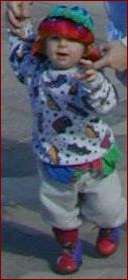 Isaac is one year old today! Happy birthday, my little bundle of joy! I love you!
Things look a bit better after a few hours of sleep. It's sunny outside, but cooler than I expect. Since it's Ramadan there's nothing for us to eat for breakfast. Not a café is open; the locals won't eat during daylight and there aren't enough tourists around to feed.
We decide to put off looking for a supermarket for a bit and we start sight-seeing. We walk through Casablanca's old city, what little is left. The souks - the shops - are opening as we stroll through the Medina. The dirt and poverty take some getting used to, and there's an ever-present smell of diesel fuel in the air.
Isaac is one year old today! Happy birthday, my little bundle of joy! I love you!
Things look a bit better after a few hours of sleep. It's sunny outside, but cooler than I expect. Since it's Ramadan there's nothing for us to eat for breakfast. Not a café is open; the locals won't eat during daylight and there aren't enough tourists around to feed.
We decide to put off looking for a supermarket for a bit and we start sight-seeing. We walk through Casablanca's old city, what little is left. The souks - the shops - are opening as we stroll through the Medina. The dirt and poverty take some getting used to, and there's an ever-present smell of diesel fuel in the air.
 Through the Medina is the pier, where we see hundreds of working seamen and fisherman walking to and fro. Wooden wheelbarrows filled with fish (and only a little ice) make their way towards town. Sardines, or minnows. Really strong diesel smell from the trucks and vans which lumber past us, bearing their commercial loads. Before I can take in much of the scenery Isaac vomits all over himself (and me, as I'm bearing him in a front-carrying harness). He's never vomited before, and it's a scary experience. A fisherman standing nearby gives us a tissue to help with the clean-up. We thank him and move on, trying to figure out what's wrong. I suggest to Rose that it's probably a combination of jet lag and fumes. I'm feeling a bit light-headed myself. We walk on, following signs to the Mohammed V mosque, the tallest building in Morocco. Based upon what I've read in my guidebook, I really want to take a tour of the mosque.
A moment for an epihany time-out, please. There are moments when one just groks a truth, knows it rather than simply understands the explanation. One of these moments happened to me while on the road from the pier to the mosque. We'd just spent fifteen minutes walking through very poor neighborhoods, with even poorer roadways, upon which old mopeds and cars belch exhaust. Then, as we approach the mosque, it comes to me. One of the major accomplishments of early religious buildings was the pushing back of entropy in the vicinity of the house of worship. In the midst of all the dust, exhaust, entropic breakdown of houses and machinery, stands a beautiful mosque, with huge neatly-kept grounds, immaculate stone courtyards, and buildings sporting the most intricate of designs. A complete repudiation of the entropy-centered lives of the locals. What a stunning change it must have been, going to prayer. Wow.
I'm probably not doing a good job of explaining this. No matter, it's probably time for you to see the mosque for yourself.
|
 subscribe